History of the AmTryke
In the 1990's, physical therapist Sue Haywood asked the Longview AMBUCS to develop an idea for something to develop a child's atrophied or weakend limbs. She wanted something that would be fun for the child as well as theraputic.
AMBUC member Gene Allen of Longview spent several weeks of his own time and his own money in the development of the AmTryke. Allen, who holds an engineering degree from Texas A&M University, was later joined by other AMBUCS members in the designing, assembling, testing and perfecting of the AmTryke.
How do AmTrykes work?
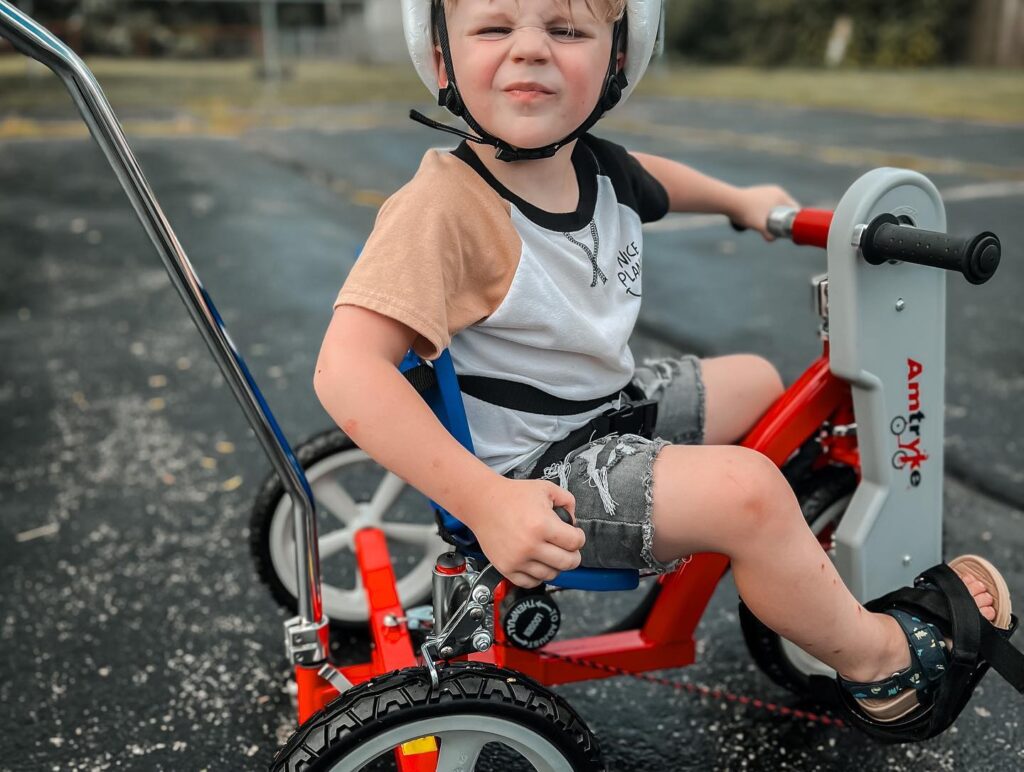
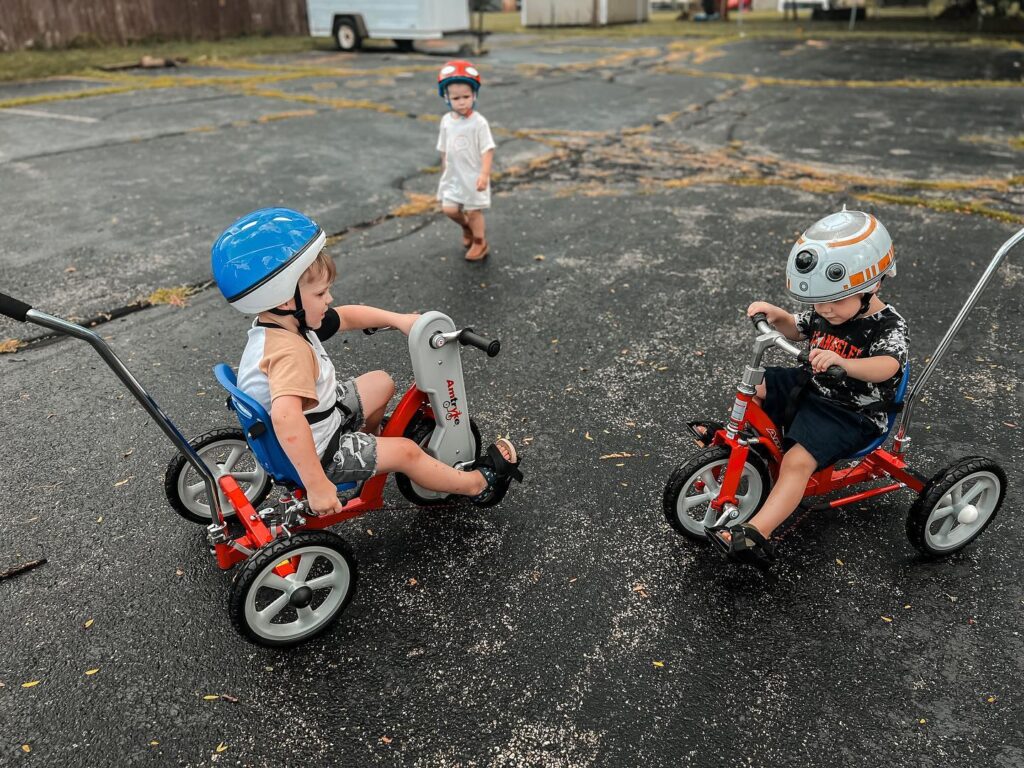
Rotating handle bars are attatched to the same chain drive as the foot pedals, allowing the rider's arms to assist the legs in propeling the bike. Velcro straps secure the feet to the pedals, while torso and hip safety belts maintain the rider in the seat. A wide wheel base and narrow turning radius provide stability.
The Tryke's unique drive mechanism provides passive exercise to the weaker limbs. The AmTryke can improve coordination, muscle strength and balance. Several adjustments can be made to accommodate the height, weight and reach of each child. The Tryke was developed for play, so that children with disabilities can ride when siblings are riding their tricycles or bicycles.
Often the child's self esteem increases as he or she is no longer left out of the group activity. It's also a lot of fun!
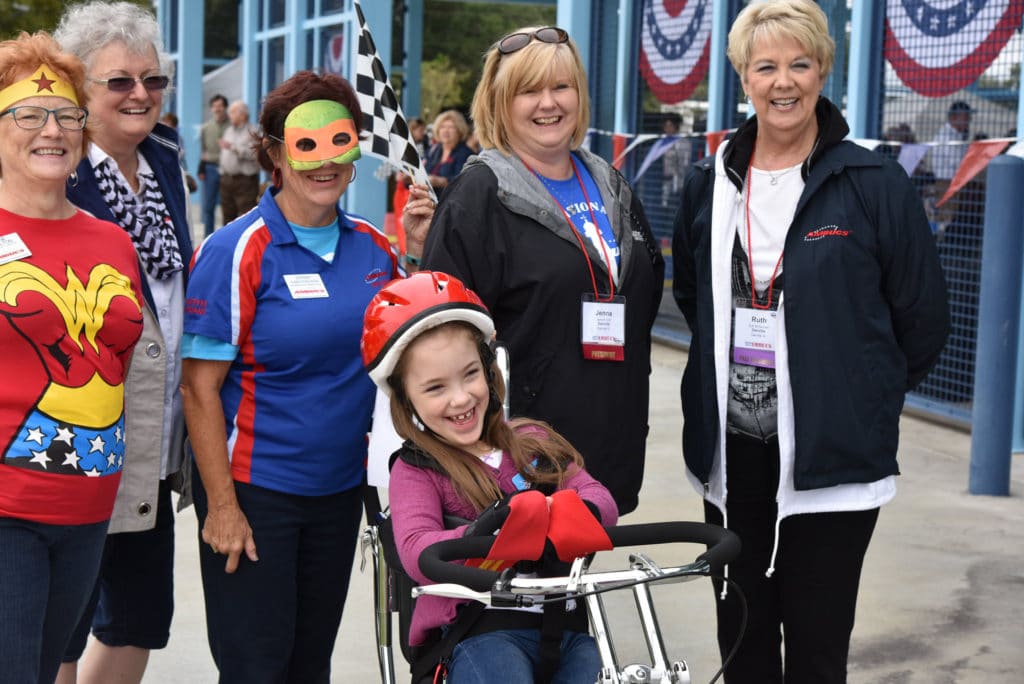
Each year, Danville Chapter of AMBUCS gives many AmTrykes to children in Vermilion County and surrounding areas. We have two demonstration sites at East Park Elementary School and sponsor a demo site at Riley hospital in Indianapolis, IN.